Start with height, reach, and where the machine can sit
- Working height and platform capacity narrow the field fast. Indoor maintenance under mezzanines or conveyors typically favors slab-ready electrics with tight turning and lower floor loading. High-bay inventory work or overhead utilities in wide aisles may need taller platforms and longer runtimes.
- Can the machine sit directly under the task? If not, a boom lift may be required. If vertical access from below is possible, a scissor lift is usually more stable and spacious for tools and materials.
Davenport site factors that change the choice
- Large industrial and distribution buildings around Davenport usually have finished concrete, long runs, and charging access. That environment supports electric scissor lifts with non-marking tires and compact footprints. See indoor options at /electric-scissor-lift-rental/.
- Outdoor projects along the Mississippi River or on unfinished lots can present soft, rutted, or sloped ground, especially after humid summer weather. Those conditions point to rough-terrain scissor lifts with wider stance and higher ground clearance. Explore outdoor units at /rough-terrain-scissor-lift-rental/.
Measurements that matter before you reserve
- Doorway and gate width/height from access point to work area
- Floor rating, slab thickness, and any sensitive coatings
- Required platform height vs. maximum fall distance to overhead objects
- Work zone size: aisle width, turning radius, and set-down space
- Power access for charging if using electric units; noise constraints for occupied facilities
When a scissor isn’t the right geometry
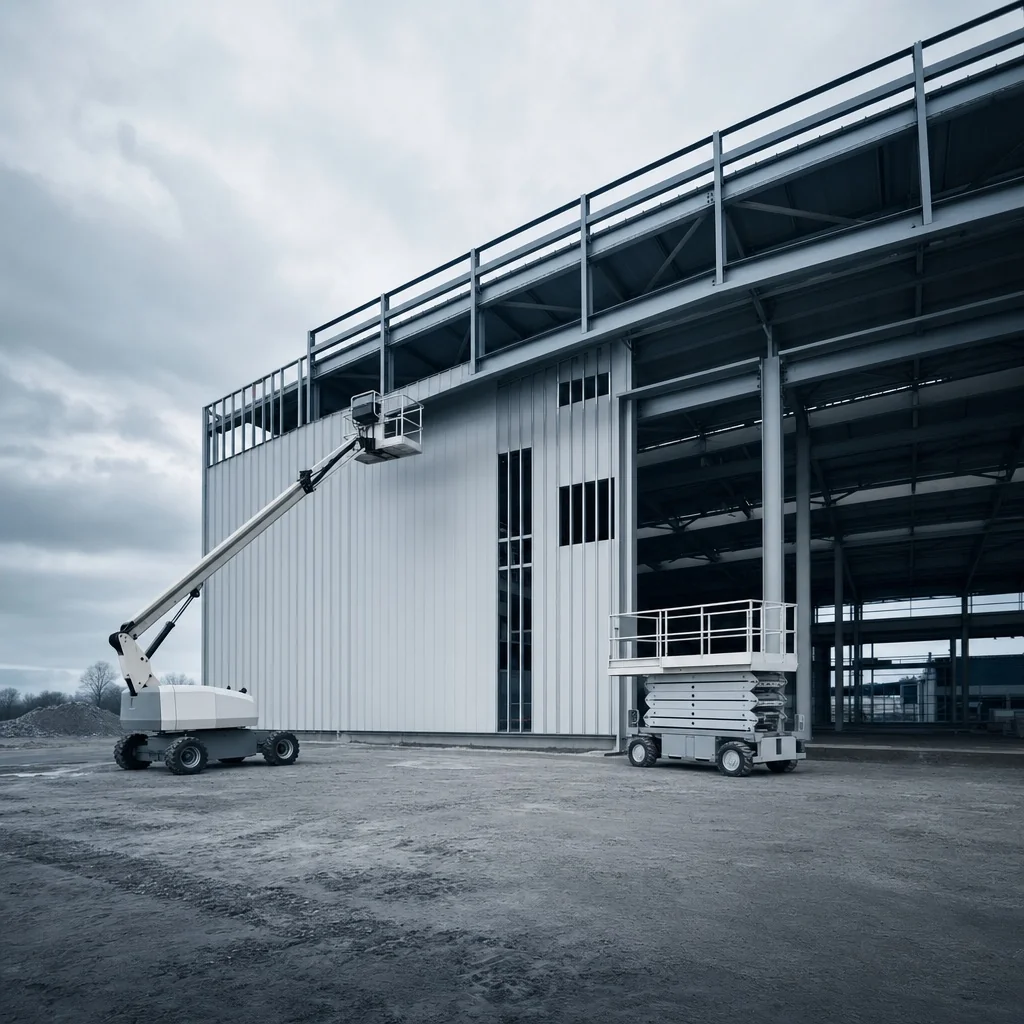
If the platform cannot sit directly beneath the work due to equipment, racking, or landscaping, consider a boom lift. Articulating booms navigate up-and-over obstacles, while telescopic models reach further in straight lines. Compare options at /aerial-lift-rental/ and /boom-lift-rental/.
Seasonal planning in the regional climate
Winter freeze-thaw cycles, spring saturation near the river, and summer humidity can change ground bearing and traction. Outdoor lift selection should account for current site prep, surface stiffness, and wind exposure. Actual conditions, the selected unit’s instructions, and site procedures govern setup and operation.