What shapes aerial lift selection in Davenport
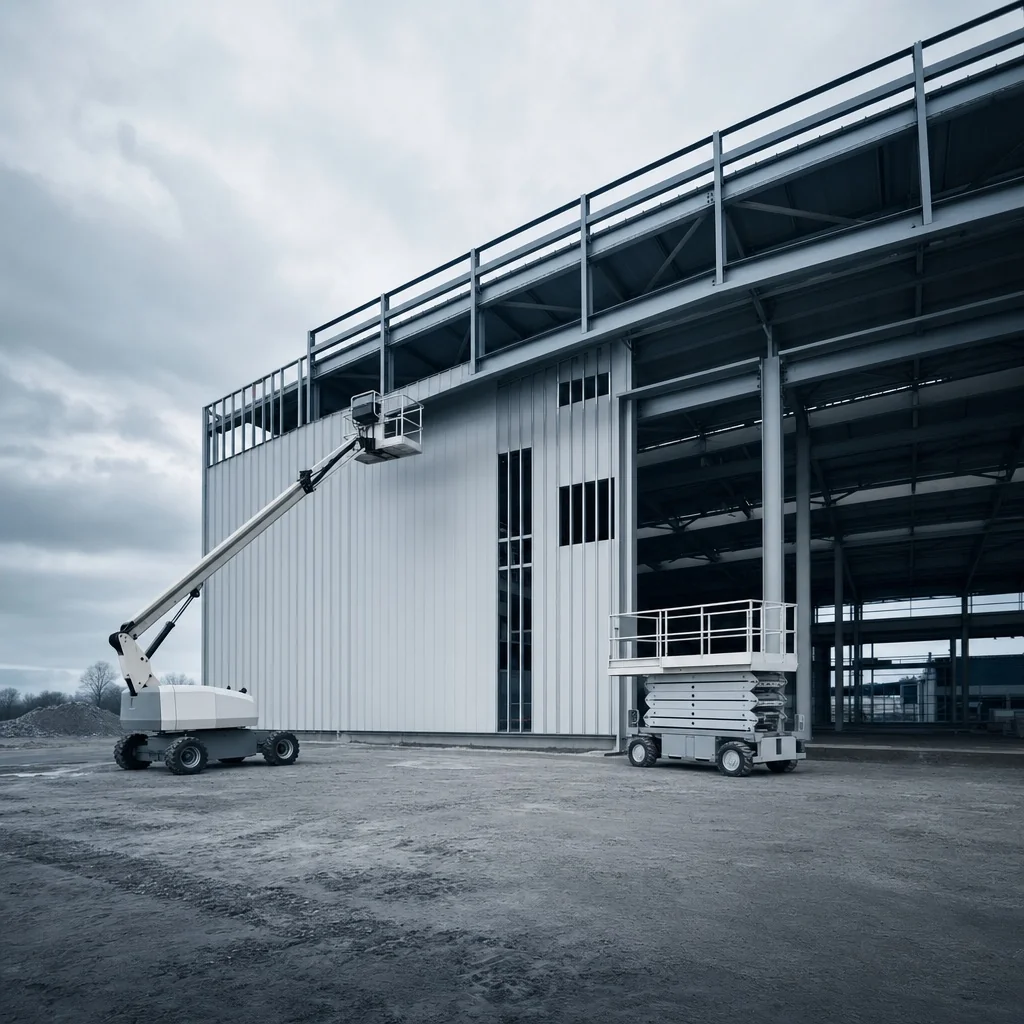
Indoor tasks around production lines, racking, and MEP systems often happen under roof structures with tight clearances and polished slabs. That setting favors electric scissor lifts with compact footprints and non-marking tires when the machine can sit below the task. Outdoors, projects along the riverfront or in open industrial yards introduce slope, soft soil, and wind exposure that point toward rough-terrain scissor lifts or boom lifts with higher ground clearance and wider wheelbases.
How we frame the decision
- Access pattern: straight up-and-down work over level slab versus outreach around obstacles.
- Surface conditions: sealed concrete, joint spacing, and slab thickness indoors; wet loam, clay, and uneven grades outdoors.
- Working envelope: platform height, outreach needs, and overhead obstructions.
- Power and emissions: electric units for enclosed spaces; engine-powered units for ventilated exterior work.
This structure helps separate choices like an electric scissor for dense aisle work from a rough-terrain scissor for staging on aggregate or fill. When the task sits offset from the machine, a boom lift becomes the comparison, with articulating models for up-and-over geometry and telescopic models for long, straight reach.
Why Davenport’s conditions matter
Seasonal swings in the regional climate bring humidity and freeze-thaw cycles that affect ground bearing outdoors while keeping interior floors dry and predictable. Logistics buildouts across local distribution buildings demand high-cycle, slab-ready lifts sized to reach top beam levels without exceeding floor loading. River-adjacent work often requires equipment capable of handling soft or uneven ground, even when the actual work height is modest.
Related equipment categories
Material staging and installation sometimes pair better with a telehandler for forward reach, or a forklift for dock work. For tight indoor maintenance, a vertical mast lift can fit narrow aisles and pass through standard doorways. Site support may also include generators and light towers, temporary fencing, or storage containers during phased work.
For category overviews, visit /products/ or reach out via /contact/.