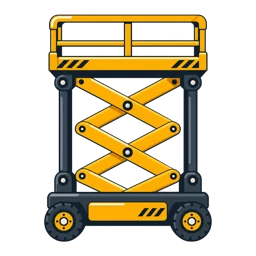
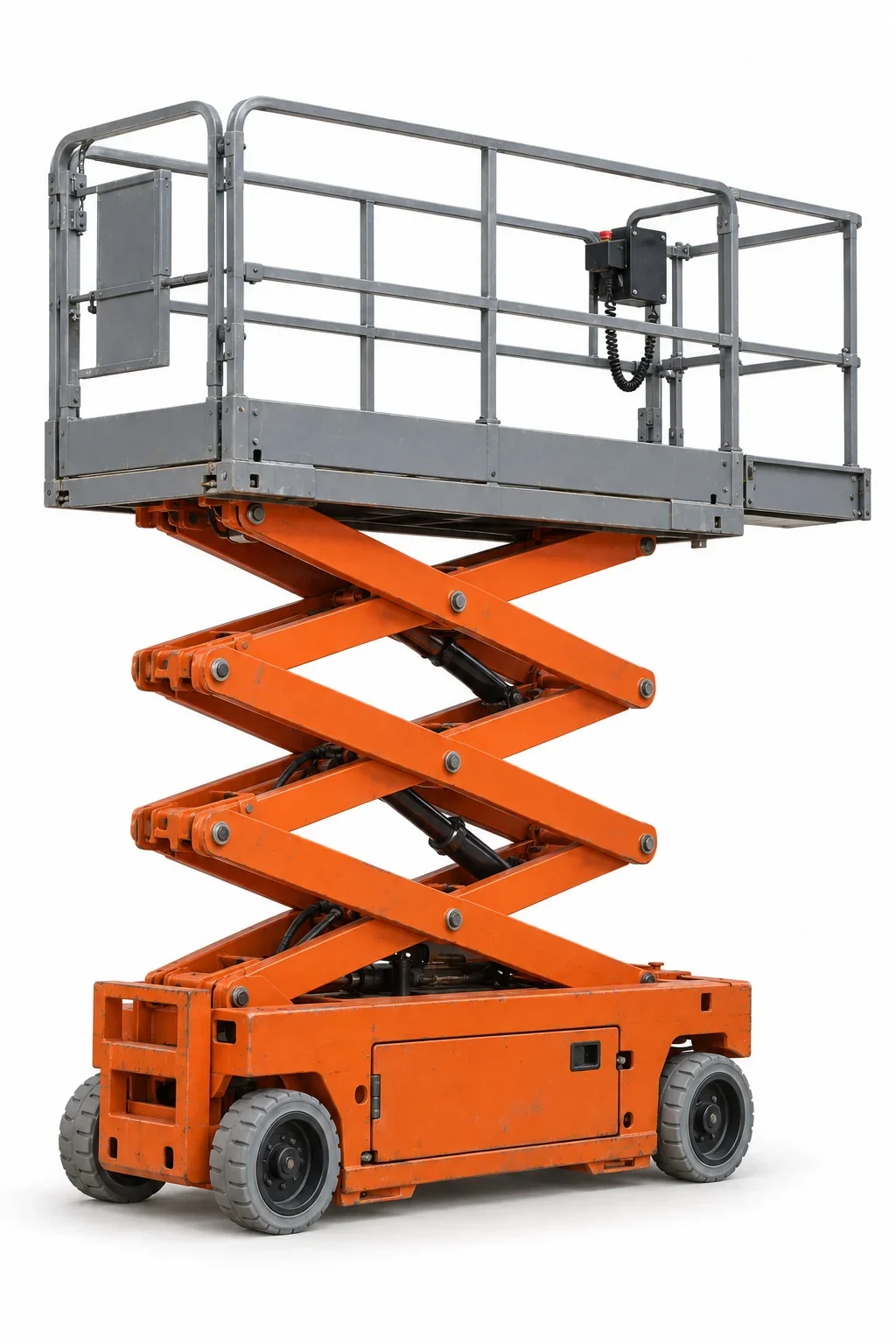
Define the indoor task geometry first
- Can the machine sit directly under the work? Electric scissors are ideal for straight-up access to lighting, ducting, and conveyors.
- Working height and platform capacity frame the options. Taller units add reach but also weight and footprint.
- Measure the route: doorways, elevator cabs, and pinch points from the dock to the work zone determine maximum machine width and stowed height.
Davenport building factors that shape the choice
- High-bay storage and production lines in the city often require long runtimes with minimal noise. Electric units support quiet shifts and reduce emissions inside enclosed spaces.
- Smooth concrete and finished coatings call for non-marking tires. Floor load limits and mezzanine ratings can rule out heavier models; verify slab capacity before finalizing.
Narrow by specifications that matter
- Stowed width vs. narrowest aisle or doorway on the route
- Stowed height vs. thresholds, sprinklers, and conduit
- Platform height needed for task reach with some working room
- Platform dimensions for parts carts or fixtures
- Onboard power for tools and battery charging access near the work
When a scissor isn’t enough indoors
Obstructions over the work area, like piping or racking, may require up-and-over reach. In those cases, see /aerial-lift-rental/ for boom comparisons or go to /boom-lift-rental/ for specifics on articulating and telescopic models.
Seasonal considerations in Davenport
Cold snaps and humid summers affect battery performance and traction on damp dock areas. Plan for indoor charging access and dry travel paths. Actual conditions, the selected unit’s instructions, and site procedures govern safe placement and use.